
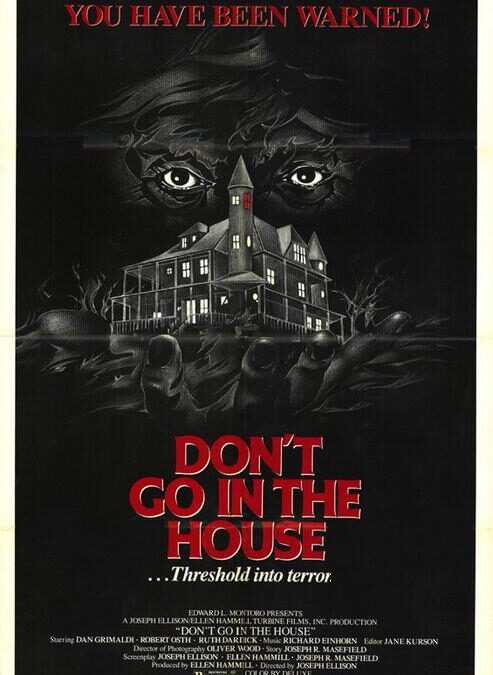
“Don’t Go in the House” is a 1979 American horror film that blends elements of psychological horror with the slasher genre. The film is known for its disturbing themes and has developed a cult following over the years. Here are some key details about the movie:
Overview
- Title: Don’t Go in the House
- Director: Joseph Ellison
- Producers: Ellen Hammill, Matthew Mallinson
- Writer: Joe Masefield (screenplay), Joseph Ellison (story)
- Release Year: 1979
- Genre: Horror, Psychological Horror, Slasher
- Runtime: Approximately 82 minutes
- Language: English
Plot Summary
The film follows Donald “Donny” Kohler, a disturbed young man who works at an incinerator. Donny’s traumatic childhood, during which he was abused by his fanatically religious mother who burned him as punishment, has left him emotionally scarred and mentally unstable. After his mother’s death, Donny begins hearing voices and succumbs to his dark impulses.
He lures women back to his home, where he has converted one room into a steel-walled incinerator. Donny then murders these women by burning them alive with a flamethrower, in a macabre reenactment of his own abuse. The film explores Donny’s psychological unraveling and his descent into madness.
Production
- Filming Locations: The film was shot in New Jersey, utilizing locations that contributed to its eerie and claustrophobic atmosphere.
- Special Effects: The special effects, particularly the scenes involving fire, were a notable aspect of the film and contributed to its notoriety.
Notable Elements
- Psychological Horror: Unlike many slasher films of its era, “Don’t Go in the House” focuses heavily on the psychological aspects of its protagonist’s descent into madness, exploring themes of child abuse and trauma.
- Graphic Violence: The film is known for its graphic depictions of violence, particularly the scenes where Donny burns his victims alive. These scenes were highly controversial and led to the film being censored or banned in some regions.
- Atmosphere: The film creates a tense and unsettling atmosphere, with much of the horror derived from Donny’s disturbed mind and the eerie, decrepit house he inhabits.
Reception
- Critical Reception: “Don’t Go in the House” received mixed reviews upon its release. Some critics praised its psychological depth and unsettling atmosphere, while others criticized it for its graphic violence and perceived exploitation of sensitive themes.
- Controversy: The film was controversial due to its graphic content and depiction of violence against women. It faced censorship in various countries and was included on the UK’s “Video Nasties” list, which comprised films that were subject to prosecution for obscenity.
Legacy
- Cult Following: Over time, “Don’t Go in the House” has developed a cult following among horror enthusiasts. Its disturbing themes and unique approach to the slasher genre have garnered appreciation from fans of psychological horror.
- Influence: While not as widely known as some other horror films of the era, it remains an influential piece within the genre, particularly for its blend of psychological horror and graphic violence.
Additional Information
- Home Video Releases: The film has been released on various home video formats, including DVD and Blu-ray. These releases often feature restored versions of the film, sometimes including special features such as commentary tracks and behind-the-scenes documentaries.
- Notable Cast: Dan Grimaldi stars as Donny Kohler, delivering a chilling performance that anchors the film. Other cast members include Robert Osth, Ruth Dardick, and Charles Bonet.
Overall, “Don’t Go in the House” is a significant entry in the horror genre, known for its disturbing exploration of psychological trauma and its controversial depiction of graphic violence. It remains a noteworthy film for its unique approach to horror and its impact on audiences and censorship debates.
